

Alzheimer Disease
- What is Alzheimer Disease
- Causes
- Symptoms
- Exams and Tests
- Treatment
- Prevention
What is Alzheimer Disease
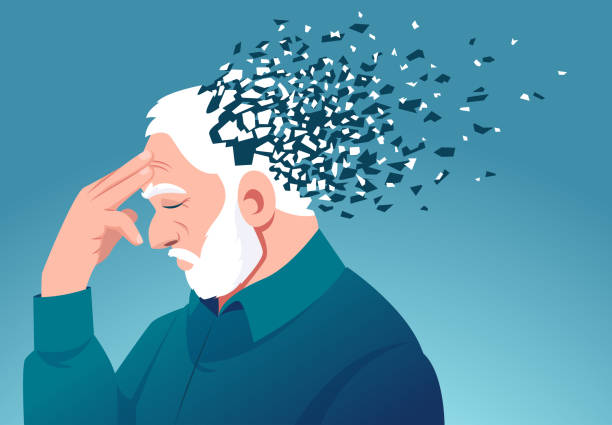
Alzheimer disease (AD) is the most common cause of dementia and is characterized by progressive decline in memory and other cognitive domains, including language, executive function, visuospatial abilities, and behavior.
There are two types of Alzheimer disease:
- Early onset Alzheimer disease — Symptoms appear before age 60. This type is much less common than late onset. It tends to get worse quickly. Early onset disease can run in families. Several genes have been identified.
- Late onset Alzheimer disease — This is the most common type. It occurs in people age 60 and older. It may run in some families, but the role of genes is less clear.
Causes
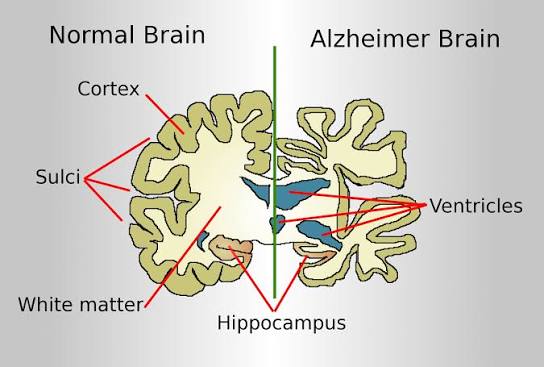
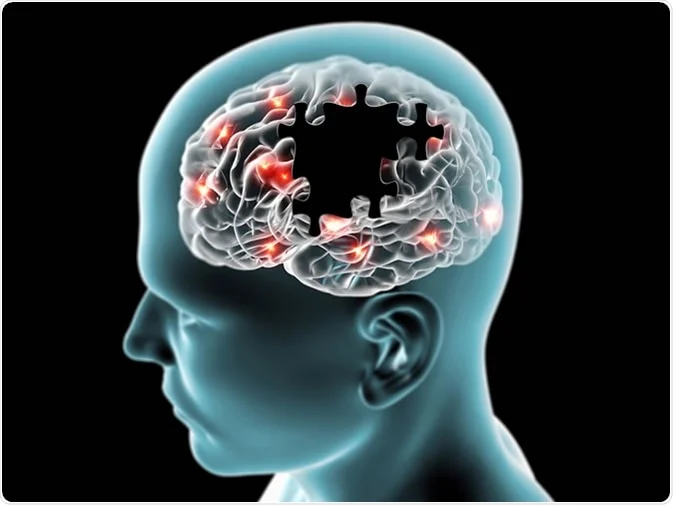
The exact cause of Alzheimer disease is not known. Research shows that certain changes in the brain are associated with Alzheimer disease. This leads to structures called neuritic plaques and neurofibrillary tangles. Most experts believe that this is the cause of Alzheimer disease but why this happens to some people is not known.
Symptoms
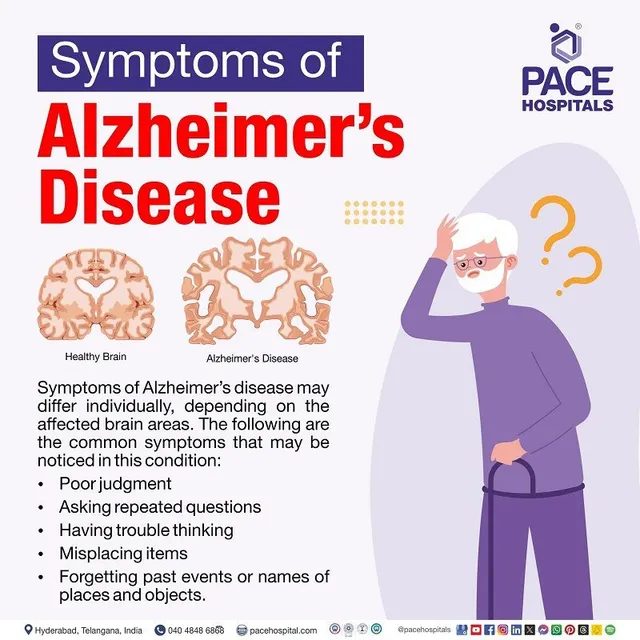
Alzheimer disease symptoms include difficulty with many areas of mental function, including:
- Emotional behavior or personality
- Language
- Memory
- Perception
- Thinking and judgment (cognitive skills)
Alzheimer disease usually first appears as forgetfulness.
Mild cognitive impairment (MCI) is a condition in which a person has more memory and thinking problems than other people their age. People with MCI have mild problems with thinking and memory that do not interfere with daily activities. They are often aware of the forgetfulness. Not everyone with MCI develops Alzheimer disease.
Symptoms of MCI include:
- Difficulty doing more than one task at a time
- Difficulty solving problems or making decisions
- Forgetting names of familiar people, recent events, or conversations
- Taking longer to do more difficult mental activities
Early symptoms of Alzheimer disease can include:
- Difficulty performing tasks that take some thought, but used to come easily, such as balancing a checkbook, playing complex games (bridge), and learning new information or routines
- Getting lost on familiar routes
- Language problems, such as trouble remembering the names of familiar objects
- Losing interest in things previously enjoyed and being in a flat mood
- Misplacing items
- Personality changes and loss of social skills
- Mood changes leading to aggressive behavior
- Poor performance of job duties
As Alzheimer disease becomes worse, symptoms are more obvious and interfere with the ability to take care of oneself.
Symptoms may include:
- Change in sleep patterns, often waking up at night
- Delusions, depression, and agitation
- Difficulty doing basic tasks, such as preparing meals, choosing proper clothing, and driving
- Difficulty reading or writing
- Forgetting details about current events
- Forgetting events in one’s life history and losing self-awareness
- Poor judgment and loss of ability to recognize danger
- Using the wrong word, mispronouncing words, or speaking in confusing sentences
- Withdrawing from social contact
People with severe Alzheimer disease can no longer:
- Recognize family members
- Perform basic activities of daily living, such as eating, dressing, and bathing
- Understand language
Other symptoms that may occur with Alzheimer disease:
- Problems controlling bowel movements or urine
- Swallowing problems
Exams and Tests
A diagnosis of Alzheimer disease is made when certain symptoms are present, and by making sure other causes of dementia are not present.
A skilled health care provider can often diagnose Alzheimer disease with the following steps:
- Performing a complete physical exam, including a nervous system exam.
- Asking about the person’s medical history and symptoms.
- Mental function tests (mental status examination).
- Neuropsychological testing.
- PET scan and lumbar puncture (spinal tap) are sometimes needed to confirm Alzheimer disease.
Tests may be done to rule out other possible causes of dementia, including:
- Anemia
- Brain tumor
- Long-term (chronic) infection
- Intoxication from medicines
- Severe depression
- Increased fluid on the brain (normal pressure hydrocephalus)
- Stroke
- Thyroid disease
- Vitamin deficiency
CT or MRI of the brain may be done to look for other causes of dementia, such as a brain tumor or stroke.
The only way to know for certain that someone has Alzheimer disease is to examine a sample of their brain tissue after death.


Treatment
There is no cure for Alzheimer disease. The goals of treatment are:
- Slow the progression of the disease (although this is difficult to do)
- Manage symptoms, such as behavior problems, confusion, and sleep problems
- Change the home environment to make daily activities easier
- Support family members and other caregivers
Medicines are used to:
- Slow the rate at which symptoms worsen, though the benefit from using these medicines may be small
- Lower the amount of beta amyloid protein in the brain
- Control problems with behavior, such as loss of judgment or confusion
Before using these medicines, ask your provider:
- What are the side effects? Is the medicine worth the risk?
- When is the best time, if any, to use these medicines?
- Do medicines for other health problems need to be changed or stopped?
Prevention
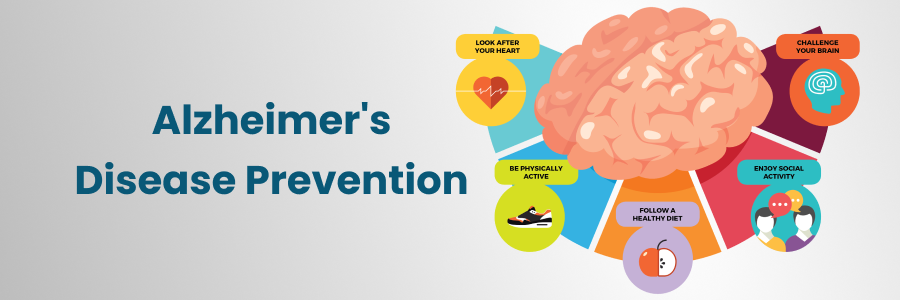
As the exact cause of Alzheimer’s disease is still unknown, there’s no certain way to prevent the condition. But a healthy lifestyle can help reduce your risk.
Reducing your risk of cardiovascular disease
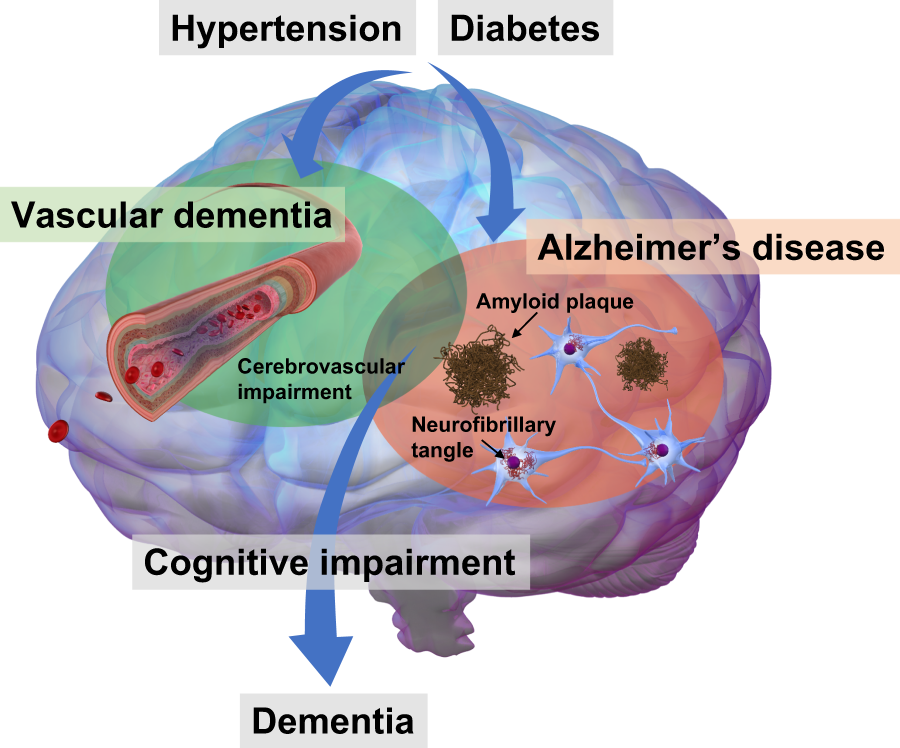
Cardiovascular disease has been linked with an increased risk of Alzheimer’s disease and vascular dementia.
You may be able to reduce your risk of developing these conditions – as well as other serious problems, such as strokes and heart attacks – by taking steps to improve your cardiovascular health.
These include:
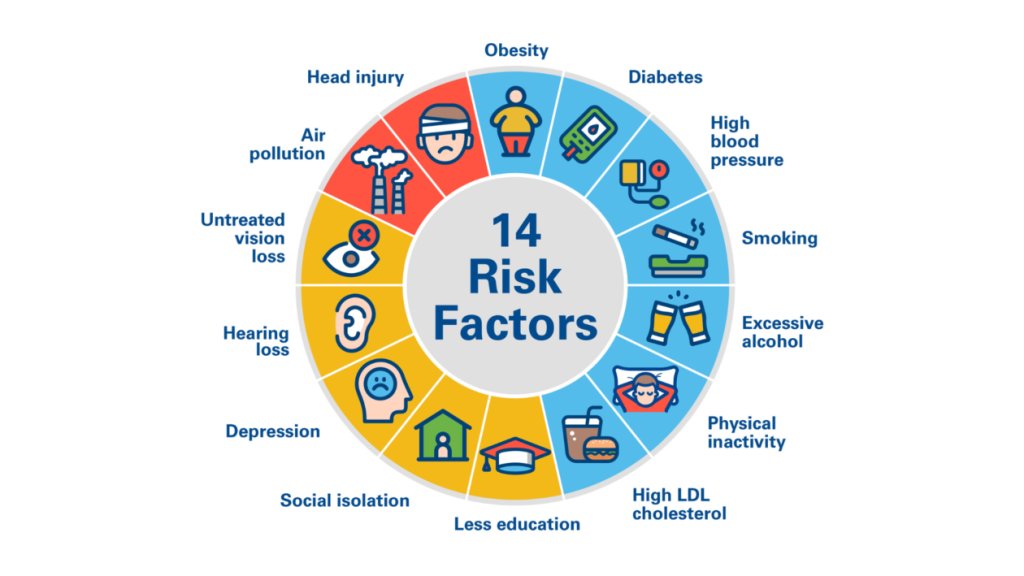
- stopping smoking
- keeping alcohol to a minimum
- eating a healthy, balanced diet, including at least 5 portions of fruit and vegetables every day
- exercising for at least 150 minutes every week by doing moderate-intensity aerobic activity (such as cycling or fast walking), or as much as you’re able to
- making sure your blood pressure is checked and controlled through regular health tests
- if you have diabetes, make sure you keep to the diet and take your medicine
Other risk factors for dementia
The latest research suggests that other factors are also important, although this does not mean these factors are directly responsible for causing dementia.
These include:
- hearing loss
- untreated depression (although this can also be a symptom of dementia)
- loneliness or social isolation
- a sedentary lifestyle
The research concluded that by modifying all the risk factors we’re able to change, our risk of dementia could be significantly reduced.

Staying mentally and socially active
There’s some evidence to suggest that rates of dementia are lower in people who remain mentally and socially active throughout their lives.
It may be possible to reduce your risk of Alzheimer’s disease and other types of dementia by:
- reading
- learning foreign languages
- playing musical instruments
- volunteering in your local community
- taking part in group sports, such as bowling
- trying new activities or hobbies
- maintaining an active social life
Interventions such as “brain training” computer games have been shown to improve cognition over a short period, but research has not yet demonstrated whether this can help prevent dementia.